
Checking for non-preferred file/folder path names (may take a long time depending on the number of files/folders) ...
This resource contains some files/folders that have non-preferred characters in their name. Show non-conforming files/folders.
This resource contains content types with files that need to be updated to match with metadata changes. Show content type files that need updating.
| Authors: |
|
|
|---|---|---|
| Owners: |
|
This resource does not have an owner who is an active HydroShare user. Contact CUAHSI (help@cuahsi.org) for information on this resource. |
| Type: | Resource | |
| Storage: | The size of this resource is 46.5 MB | |
| Created: | May 14, 2026 at 7:35 p.m. (UTC) | |
| Last updated: | May 22, 2026 at 7:14 p.m. (UTC) | |
| Citation: | See how to cite this resource | |
| Content types: | Geographic Raster Content |
| Sharing Status: | Public |
|---|---|
| Views: | 32 |
| Downloads: | 11 |
| +1 Votes: | Be the first one to this. |
| Comments: | No comments (yet) |
Abstract
Marine aquaculture is an increasingly important tool for sustainable food production, but identifying suitable sites requires careful consideration of environmental conditions. This project uses spatial analysis in R to prioritize Exclusive Economic Zones (EEZs) along the US West Coast for potential marine aquaculture development, focusing on oysters and red abalone. Using sea surface temperature (SST) data averaged from 2008 to 2012 and bathymetric depth data, suitable habitat was identified by reclassifying raster layers according to each species' known environmental tolerances. For example, SST between 11 and 30°C and depths between 0 and 70 meters below sea level is ideal for oysters. Suitable areas were then intersected with EEZ boundaries to determine which regions offer the greatest aquaculture potential. Results are visualized alongside bathymetric data to support spatial decision-making. The workflow is generalized into a reusable function and applied to red abalone, demonstrating its transferability to other species with different habitat requirements.
Subject Keywords
Coverage
Spatial
Content
README.md
Prioritizing Potential Aquaculture
Kimberlee Wong - December 7, 2024
About
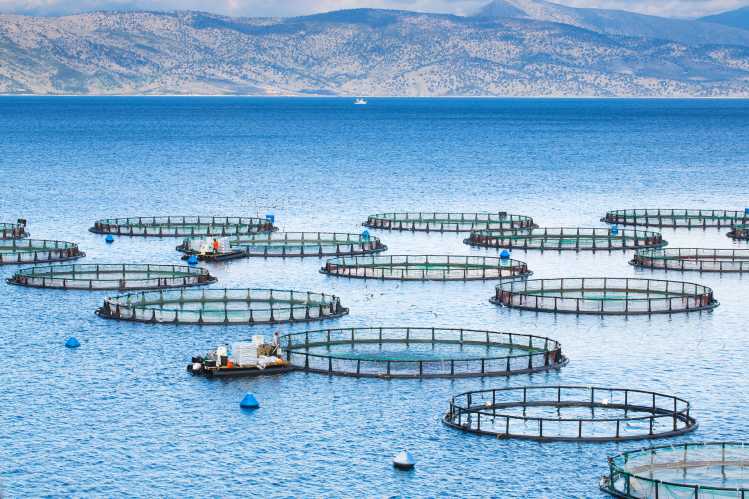
This repository houses a notebook that shows the process of determining which Exclusive Economic Zones (EEZ) on the West Coast of the US are best suited to developing marine aquaculture for several species of oysters and red abalone. Suitable locations will be determined based on range of suitable sea surface temperature (SST) and depth values for the species. A function was created that has the following characteristics:
arguments: - minimum and maximum sea surface temperature - minimum and maximum depth - species name
outputs: - map of EEZ regions colored by amount of suitable area - species name should be included in the map’s title
Highlights
- Map algebra
- Combining raster and vector data
- Resampling and masking raster data
- Creating a function
Repository Structure
prioritizing_aquaculture
│   README.md
│   prioritizing_potential_aquaculture.qmd
│   prioritizing_potential_aquaculture.html
│   .DS_Store
│   prioritizing_potential_aquaculture.Rproj
|   .gitignore
References of Data
| Data | Source | Link |
|---|---|---|
| Depth | GEBCO Gridded Bathymetry Data | https://www.gebco.net/data_and_products/gridded_bathymetry_data/#area |
| SST | NOAA Global 5km Satellite Sea Surface Temperature Anomaly | https://coralreefwatch.noaa.gov/product/5km/index_5km_ssta.php |
| West Coast EEZs | Marine Regions EEZ Boundaries | https://www.marineregions.org/eez.php |
| Species Requirements | SeaLifeBase | https://www.sealifebase.ca/search.php |
Acknowledgements
Assignment came from UCSB Masters of Environmental Data Science class, EDS 223 - Working with Environmental Data Science. Class is taught by Ruth Oliver.
Data is available for download here
Data Services
Related Resources
| This resource is referenced by | https://kimberleewong.github.io/posts/prioritize_aquaculture/prioritizing_potential_aquaculture_blog.html |
How to Cite
This resource is shared under the Creative Commons Attribution CC BY.
http://creativecommons.org/licenses/by/4.0/
Comments
There are currently no comments
New Comment